
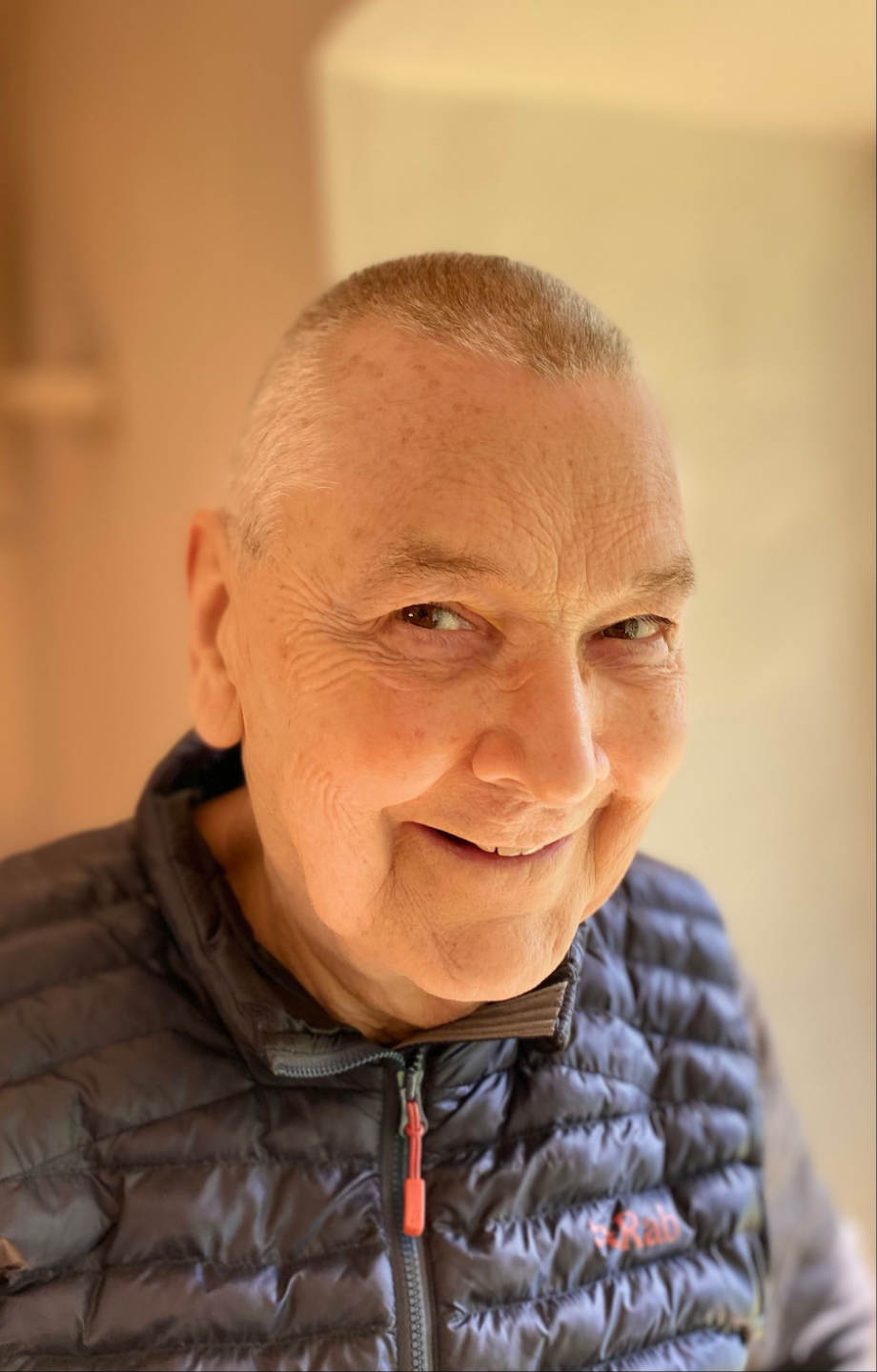
Narada Muni (Tony Sugden)
Narada originally trained Bioscience before spending fifteen years working in trouble-shooting and analysis for business computer systems. He then went on to study Chinese Medicine, which he practiced in Cambridge for over twenty years, specialising in the treatment of musculo-skeletal disorders. His deep understanding of anatamy and physiology informs his teaching of Yoga asana and "freedom of movement".
"Freedom of movement" was the definition he used when asked to share his 'exercise method' in Eastern Zambia - a country he spent many years travelling back and forth to, where no one had heard of the term Yoga. For those also seeking to learn meditation, Narada believes this definition applies to both physical movement and to thoughts and emotions. Narada believes the philosophy and practice of Yoga to be truly Universal; applicable and relevant to all human beings, not any particular culture.
Narada's journey
It was a chance encounter with the Bhagavad Gita at the tender age of 14, following a stark realisation that one day he would die, that set Narada on the spiritual path. Several years later, whilst studying at University, he met Swami Jyotirmayananda of the Bihar School of Yoga. Swami Jyotrimayananda was a brilliant, dynamic teacher who laid down the foundations of practice for Narada and encouraged him to teach Yoga at Surrey University.
His next teacher was a ‘populist’ guru from India, from whom he learned discipline and focus. In India, he had his first taste of Ashram life and diving deep into meditation. Realising that ‘spiritual experience’ is not everything (we live in the world after all), Narada wondered how to find a perspective in daily life that doesn’t involve being swept this way and that by the vagaries of mind and emotions once no longer in meditation.
Narada's third teacher was, and is to this day, Swami Nischalananda Saraswati, to whom he feels he owes everything that has unfolded for him in the last decade. Narada lived at Mandala Yoga Ashram for 5 years and was a student of the ashram's Two-Year Yoga Teacher Training. However, he feels his most significant learning came from the unspoken wisdom that a true teacher can impart.
Narada has studied many of the frameworks of understanding and techniques taught in the Bihar Yoga tradition - Pratyahara, Tattwa Shuddhi, Prana Vidya and the Kriyas, as well as the systems of the Chakras and Koshas.
These days, he feels the strongest affinity with the practices of the Vigyana Bhairava Tantra, as translated and taught by Swami Nishchalananda, and also the Zen approach, and over the last six or so years, the ‘Direct Path’. This is an approach originating from Sri Atmananda Krishnamenon, also Ramana Maharshi and Sri Nisargadatta. This has helped to bring the perspective for which I searched over many years, on the foundations laid by Swamiji. My immense gratitude to all those teachers.

